


The New Year opened with literal blasts in Caracas and U.S. forces on the ground in Venezuela.
I’d just finished reading Marjorie Taylor Greene’s exit interview with The New York Times, where, with some prescience, she predicted that with President Trump flailing at home, there would be more foreign engagements and war ahead.
The one thing MTG and I agreed on became reality.
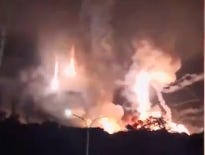
In a dramatic midnight raid, American forces seized Nicolás Maduro, ending his corrupt grip on Venezuela.
Maduro was a bad man, loathed by many people in Venezuela and despised by the country’s expat community. He suppressed dissent, rigged elections and grifted while his people wallowed in poverty.
But what happens now? What’s the plan?
In the morning after and the days since, there’s no evidence of a fully baked plan.
The Maduro Problem
I first met Hugo Chávez, Maduro’s predecessor, at the 2009 Summit of the Americas in Trinidad and Tobago, when I led President Obama’s press advance. Chávez was pure theater, traveling with his own self-appointed paparazzi, handing Obama a book on governance in view of his own photographer, disrupting multilateral meetings with his own “journalists” literally storming in and fighting with the American press.
All show, no substance.
Chávez promised Venezuelans the moon and delivered corruption. Maduro inherited the playbook and perfected the grift. His wife, Cilia Flores, whom he married in 2013, allegedly installed more than 40 unqualified hires including many of her own family members in government positions.
Socialism in name only. Kleptocracy in practice.
My Venezuelan friends describe two distinct countries: Before Chávez and after. Venezuelans risked everything and voted overwhelmingly to remove Maduro. Still he wouldn’t go. Regardless of Trump’s plans or lack thereof it’s important to understand that for many Venezuelans Maduro’s removal is cause for celebration.
In the U.S., I have friends with family members in limbo, paying close attention to Trump’s terminations of Biden-era Venezuelan Temporary Protected Status. Most would welcome a strong Venezuela that allows them to return safely. Is that what we’ll get?
The Americas Blind Spot
As a product of U.S. public schools, I learned almost everything about Western Europe and very little about Latin American government or systems.
At the Summit of Americas I gained a new perspective. Leader after leader stood up with barely concealed resentment toward the United States. I remember Nicaragua’s Daniel Ortega, dressed in what he calls his revolutionary uniform, being particularly vocal.
Distance cuts both ways. While we ignored Latin America, China moved in. While we lectured about democracy, authoritarian regimes flourished across the region.
It’s different for someone like Secretary of State Marco Rubio.
He’s from the region. His family fled Castro’s Cuba, just 90 miles from Florida. Rubio knows what oppressive regimes do to people. I know he wants better. But even on Sunday morning shows, he seemed as clear as mud about who’s actually running Venezuela now, and what actually is the plan for the region. If the Secretary of State can’t articulate the plan, what exactly are we doing?
I saw an old clip circulating this weekend of Hollywood making the case for the US to pay close attention to Venezuela, which now entertains delegations from Iran, China, Russia, because it is so close to the U.S. That same proximity matters if this goes south.
What Comes Next
Things can go south, very quickly, without a plan. And Americans have very recent history with swift, seemingly successful invasions followed by long engagements without a clear endgame.
We know the operation to remove Maduro involved hundreds of Special Operations forces, reportedly more than 100 aircraft and thousands of troops in the region. Deployment costs alone run tens of millions per day. Our 20 year involvement in Iraq and Afghanistan cost more than $8 trillion and counting. Venezuela won’t be Iraq, the administration insists. But what will it be?
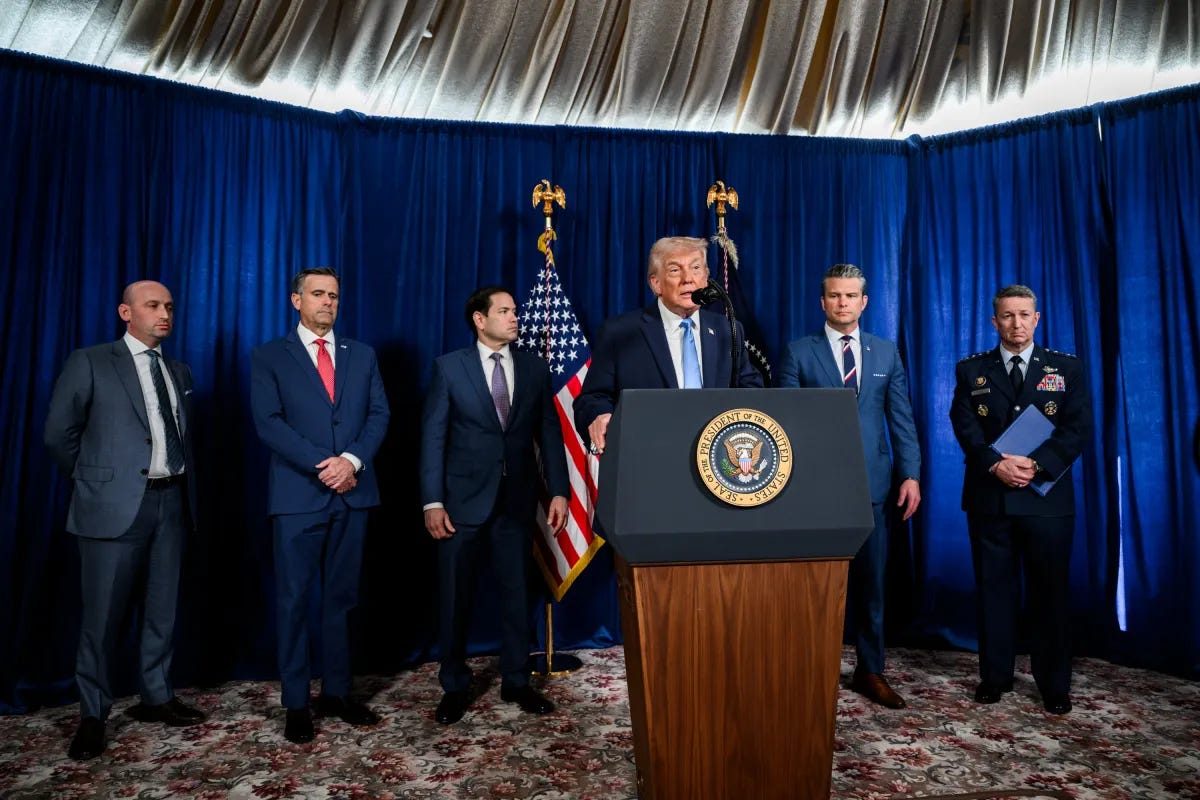
In Trump’s press conference the day after the raid, the only thing he made clear was his belief that it’s “America First” for the U.S. to run Venezuela.
How? How long? At what cost? Would Congress even authorize this?
After two decades in the Middle East, after Afghanistan, I don’t think Americans’ appetite for foreign entanglements has changed.
I joined a group of conservatives and progressives after the 2024 election and one of the topics that came up was Venezuela and our escalating “war on drugs.” I wondered openly what a war in our own hemisphere would look like.
We might yet find out.
The Leadership Vacuum
María Corina Machado, the opposition leader many Venezuelans actually support, seemed prepared to enter the country after Maduro’s capture. Then President Trump said he didn’t think she had the support. She’s been making her case on Fox News, interviewing with Sean Hannity, just last night she said to him she’d be willing to give President Trump the Nobel Peace Prize she recently won. She also warned that Maduro’s Vice President is no better, and instead continues to jail journalists (though I’m not sure that will swing Trump’s support).
My guess is that behind the scenes she’s likely been trying to talk to Rubio. Because it’s entirely unclear who is running Venezuela now.
Is it the U.S.? The Vice President who worked alongside Maduro? Machado — who has spoken favorably about President Trump, but received the Nobel Prize that Trump wanted? Hannity also on Fox News mentioned that Stephen Miller would have a larger role in running Venezuela?
The whole thing makes me think of a movie (that probably isn’t worth your time) that I watched last year, Moutainhead, about exceedingly wealthy tech guys trying to figure out which of them would go run a foreign nation. The poorest, they decided. It would be laughable if it weren’t so consequential.
I wish we had an actual plan to lean into the Americas. A plan that helped business (fair, transparent and regulated business) flourish. A plan for clean government, no deals with China and access to capital in the Western hemisphere.
I’m not sure that’s what we’ll get.
What Democrats Should Do
What should Democrats do? Start with clarity. Not paragraphs. Not twelve-point plans. Simple words:
What Trump just did is risky, costly, and half-baked.
That’s it. Say it clearly. Repeat it. Then demand answers to basic questions. Like: How does this end? There is no way the Republicans would have let a Democratic administration walk into an entanglement like this without demanding answers. And President Trump alone made this decision, took this action.
There are long-term costs beyond the price tag, like our country’s reputation in a region that already views us with suspicion. There’s a cost when resentment builds, when our standing diminishes, when we raise new questions with no clear answers.
I hope this works out for Venezuela. I hope this risky engagement works out for America, and doesn’t join a long list of American misadventures in nation building. (Especially when Americans have been so clear they want the focus here at home).
I hope Venezuelans get the country they voted for and deserve. But hope isn’t a strategy. I think I have some experience with that.