


Incoming Kansas Senator Adam Hamilton, one of the stars of Democrats’ historic midterm victory, was asked what he thought of Stephen Miller’s appointment as White House Chief of Staff.
It was a cute moment for a new official with little Washington experience. He said he didn’t think Miller’s appointment needed Senate confirmation. He was right.
Miller’s appointment, President Donald Trump’s first move after midterm elections, is a sign of things to come. Of a President who is, it seems, going through the stages of grief. If you listen to what he is saying, it’s hard to walk away with the impression that Trump understands (or acknowledges) the sweep of a historic midterm wipeout for the GOP, one that left Republicans electorally decimated in House races, Senate contest, statehouses and local races from Alaska to Georgia.
Democrats, like Hamilton, won seats their party hadn’t held since before World War II. Republicans went from a House majority to a nearly 100 seat minority.
Miller’s appointment, in this environment, is a little odd for the moment. As I said, Trump seems to be going through the stages of grief, giving an even greater platform to perhaps his most controversial aide, casually denying some election results, ignoring calls from within his own party to replace Defense Sec. Pete Hegseth and even occasionally extending an olive branch. (During an extended interview with 60 Minutes, he said he wanted to work with Democrats on immigration reform.)
Of all these choices, elevating someone who was in charge of some of the least popular policies in the White House to such a role seems most out of tune with the mood of the country.
But then Adam Hamilton is right, it’s no one’s decision but the President’s.
Democrats’ Bogeyman
I have met many of President Trump’s senior aides. I haven’t actually met Stephen Miller.
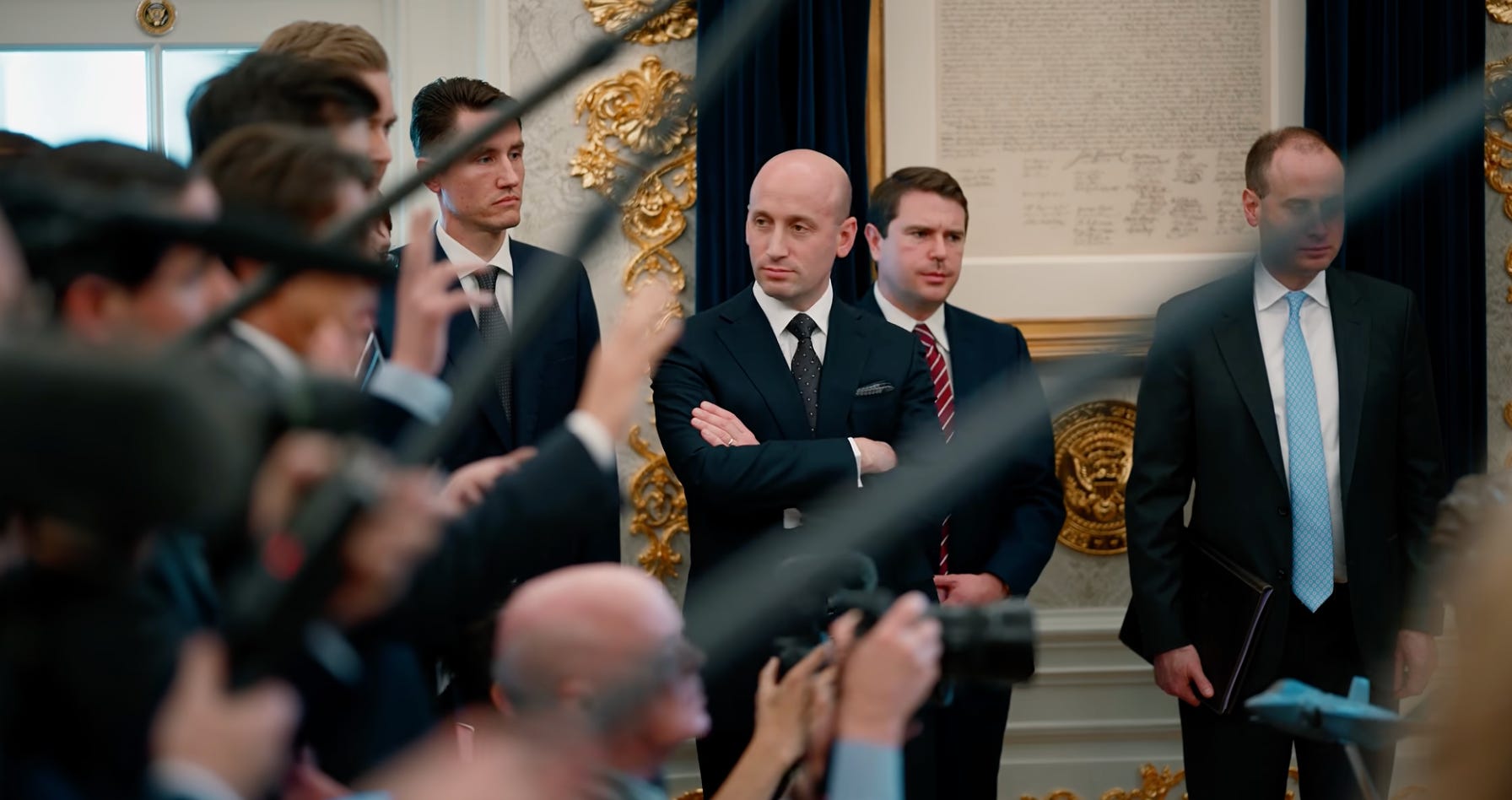
For Democrats, he seems (and often moves) like a bogeyman, someone who doesn’t circulate socially beyond his political circles. The videos that circulate from his time in high school and college are, in my opinion, genuinely weird. In one, he sounds smug and entitled, saying he doesn’t want to take out trash because there are janitors for that.
In another, he seems like an angry teen, full of rage. That’s hard for me to understand. Miller grew up affluent in Santa Monica, California, a picturesque coastal city, just outside of Los Angeles. It’s a charming place with big beaches, a famous pier and neighborhoods that show up in movies all the time.
Miller went to Santa Monica High School before going to the private college, Duke, far away from his parents. His parents were highly educated, his dad was a lawyer, and Miller was raised Jewish.
He moved to Washington soon after graduating from Duke, and went to work for Michele Bachmann, a Congresswoman from Minnesota, who was a fringe firebrand in her era but who might now sit right inside the GOP norm. She once accused the Obama administration of vast spending in India (I was on the trip and we were all confused, she didn’t have her facts right). She often engaged in conspiracy theories and had her own failed run for President in 2012.
Miller went on to work for Alabama GOP Sen. Jeff Sessions, and worked to oppose the 2013/2014 Immigration bill. From his time with Sessions, Miller moved to a role on Trump’s campaign and then has been with him ever since, from the first to second White House.
What you can say about Miller is that he has been a vocal advocate for Trump and his policies, particularly the administration’s hardline immigration policy and enforcement. That, and his aggressive and often awkward TV appearances, is what most Americans know about him.
Which is why Miller is such a quizzical choice if immigration reform is a compromise the Trump administration wants to make. Or if staff appointments are any way to show the American people that he understands an election result.
A Powerful Unconfirmed Leader
Having worked in the White House, you want a Chief of Staff who will communicate and wield the power of government effectively. This is a person the President must rely on to get the right information out, help set their priorities and who makes use of their access.
There are different models for how Presidents use their Chief of Staff, but generally speaking it comes down to dependability and someone who has the President’s ear. Frankly, Stephen Miller, as much as he’s the bogeyman to the left, seems to be that.
Whether people enjoy working with him — that’s less clear. The media has documented Miller’s alleged temper, his willingness to knife fight internally. More of that will probably come out and the best way to find out whether there are problems would be more leaks.
One thing I would caution against: Miller’s appointment, strange as it seems, doesn’t foreclose the chance of compromise. If there’s one thing we’ve learned in 10+ years of President Trump operating as a public figure is that more often it comes down to him, not staff.
Appointments matter, they suggest how he is feeling, but when the President decides to do something it can catch his staff and his team as flatfooted as anyone else. He swings with the public temperature, always well aware of his own reputation.
It’s the thing he cares about most, and as his presidency wraps up his legacy will no doubt be on his mind.
Ultimately, the President will be the one who decides whether he’s willing to compromise. And what these next two years will be like. Even if appointing Stephen Miller doesn’t suggest as much, I hope the President is willing to find broader agreement. If he wants to start with immigration, I expect many Democrats will be game.