


A federal judge blocked Nexstar’s $6.2 billion merger with Tegna last Friday, a deal that would have handed one company 265 television stations across 44 states, reaching 80% of US households. You might not have even known about it—the merger, the ruling, what is still on the line.
As the ruling landed, though, I found myself with a lot of thoughts. Some about my days with Nexstar’s NewsNation, which I spoke with Slate’s Nitish Pahwa who covered the story today here, some as far back as the activism of my youth.
I’ll start with the activism of my youth: Galesburg, Illinois wasn’t the only town where this happened, but in the 90s, MTV was relatively controversial, and a few people in charge decided to listen to the voices that didn’t want to hear it. They pulled MTV off air locally. Too provocative. Too loud. Too much. I remember starting a petition, getting signatures, and in one rare moment of family political unity, even my brothers signed on.
I faxed in the petition (yes, I’m aging myself). I’m sure it wasn’t a result of my petition, but they did eventually bring it back. I just remember how much it angered me that a few voices could control what we all watched. Gatekeepers deciding what we needed to know.
That instinct has never left me.
And it’s exactly what’s at stake now, except the gatekeepers aren’t local officials responding to a handful of complaints. They’re billion-dollar media companies with political relationships to protect.
A Free Press Is the Thing That Holds Everyone Accountable
I launched a journalism partnership with the University of Arizona’s Center for the Philosophy of Freedom last Thursday alongside longtime conservative columnist Jay Nordlinger. In our first conversation, we kept coming back to the state of the press. A lived crisis we’ve both seen from different angles.
Eight years in the Obama campaign and White House taught me that a free and fair press is the one thing that holds everyone accountable. Politicians don’t like hard questions. But a good reporter doesn’t accept no comment, and neither should a functioning democracy.
When Jeff Bezos bought The Washington Post, he promised no interference. We’ve watched that promise erode. An editorial page increasingly friendly to the current administration, layoffs gutting international desks at a moment when disinformation in conflict zones is more dangerous than ever. They’ve framed these decisions as business decisions. What they’ve actually made is a values decisions.
That’s the lens I bring to the Nexstar debate. And that’s also why media consolidation, such as it is, matters so much to our ideas of freedom.
I Used to Be One of Their Loudest Cheerleaders
Nexstar owns NewsNation, its national cable news network.
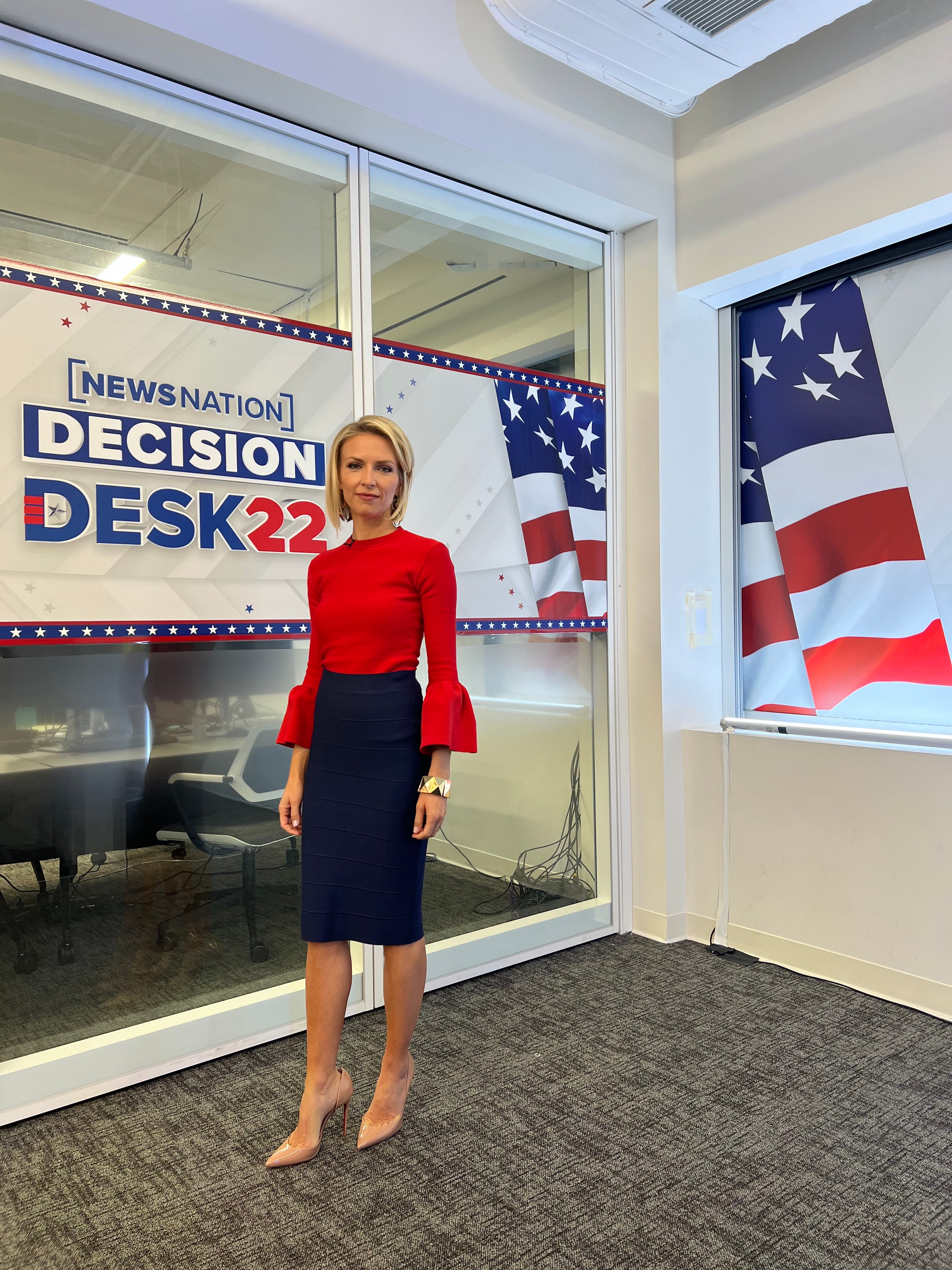
My first real experience with them was election night 2022, when a network executive asked me to join their coverage for nine hours. We called it straight on candidates from both parties. I was honest in ways I hadn’t always been able to be on television, and they didn’t stop me. Network executives were thrilled. They said they wanted me as a contributor. I believed I had found a place where I could tell the truth without retribution.
It didn’t last.
As we approached 2024, I felt the pressure shifting. The network seemed increasingly interested in positioning itself favorably with a potential Trump administration.
I lost my love for the network the night they hosted the last Republican debate without Trump. Chris Cuomo ran the pre and post show. The “Democrat” for the night was Geraldo Rivera. The only thing liberal I knew about Geraldo was the number of wives he had.
I found myself in a trailer with Mick Mulvaney, President Trump’s former acting chief of staff, and Larry Hogan, a popular Republican Governor of a Democratic state, all of us off air at the time, three people with real political experience who truly cared, watching peacocks fluff their feathers for the camera, performing without substance.
I grew angry thinking about how hard I’d cheer-led for something becoming exactly what I hated. I wanted the real conversations with people who could call out all sides, from all sides, especially at critical moments. I was all too honest with network executives who knew I was angry. I made no attempts to conceal it.
It wasn’t long before I was on a panel where Jason Miller, a Trump aide, appeared. He has been forced to admit to hiring women for sex and lying to his wife. He impregnated a rising Latino Republican and somehow she lost her role in the Trump orbit, but he didn’t. He had proven, over and over, that he would lie. I had no reason to trust anything he said, and I said so, on air.
Network leadership was ticked. I got lit into in the hallway by the producer. I wasn’t allowed to criticize a guest, I was told. I’m quite sure that rule would not have applied if the guest had been Hunter Biden.
I was on less after that. When my agent called to say they’d opted to end my contract, I was fine. They had told me who they were. I hadn’t changed. But my trust in their marketing was rocked, this wasn’t news for all Americans, especially if we were expected to conceal the truth about a guest who had a documented history of lies.
What the Ruling Means, and What It Doesn’t
On Friday U.S. District Court Chief Judge Troy Nunley found that eight Democratic state attorneys general and DirecTV are likely to prevail on antitrust claims. That the merger would reduce competition, raise consumer costs, and weaken local journalism. Blocking it, he wrote, is in the public interest.
Nexstar will appeal. Trump publicly endorsed the deal, and his FCC chairman greenlit it weeks later. The administration’s fingerprints are all over this. But the ruling matters because the judge named what critics have been saying for months. Unchecked consolidation reduces competition, weakens local news, and costs communities something that can’t be easily replaced.
What we’ll be left with, if this continues, is a more ideologically managed version of local news, calibrated for access and political relationship, not public service. That’s not a conspiracy theory. That’s what I watched happen in real time at a network I once believed in.
Trust in institutions is at a historic low. The business model for reliable journalism is broken. Those two facts together are my biggest fear for this country.
While independent voices are finding audiences, and honest brokers are building new platforms, I still fear that what’s disappearing is real investigative journalism. The kind of journalism I know we need requires resources, time, and the courage to make powerful people (all powerful people regardless of party) uncomfortable. We cannot afford to lose it, and with these mergers that’s exactly what’s under threat.
***
One note: I’m expecting a baby boy any day now. I’ll send an update through the column when he arrives, and I’ll be stepping back briefly to be present with my family.
The last time my husband and I welcomed a child, I was immediately back at work. So much so I was in Afghanistan 7 weeks after I delivered my son in 2012. Looking back, I missed some of the earliest days of my son’s life and I don’t want to miss them this time. I so appreciate the community we’ve built and I am so grateful for your understanding. Please feel free to write and stay in touch. I will certainly write back as time allows.
Many blessings, Johanna! I am so happy for you and your family. What a joy! Sending my warmest and best thoughts for an easy delivery.
Nothing but the best of thoughts going your way Johanna! I'm happy there are no Afghanistans for you this time :) Best of luck, best of health to you and all the assorted Maskas! We'll be here anxiously waiting when you are totally ready. Best!!