


I had a vivid dream a few months back.
Dark clouds. I could see aircraft overhead. Our country was under attack. I remember waking up, startled, and thinking of the line: If we’d known then what we know now, would we take it all more seriously?
I have friends who are filmmakers. They were in Israel before October 7, filming interviews with politicians who had the most vitriol for each other. This was the height of Benjamin Netanyahu’s push to overhaul the judiciary, with Israelis in the streets for months, their country tearing at its own seams. And then their citizens would be attacked.
It always seems that when a country’s leaders turn against each other, their countries are most vulnerable.
For months now I’ve been writing about how we’ve turned against each other, refusing to see each other’s perspective. And now we’ve shut down — at least partially — the Department of Homeland Security.
We have to ask ourselves: What are we doing here?
What We Built After 9/11
The Department of Homeland Security is relatively new as federal agencies go.
It came about after our country was attacked on 9/11, as a response to failures many of us watched in real-time — government agencies needed to talk to each other. Signed into law in November 2002, and functioning by March of the following year, DHS consolidated 22 federal agencies to help keep our homeland safe.
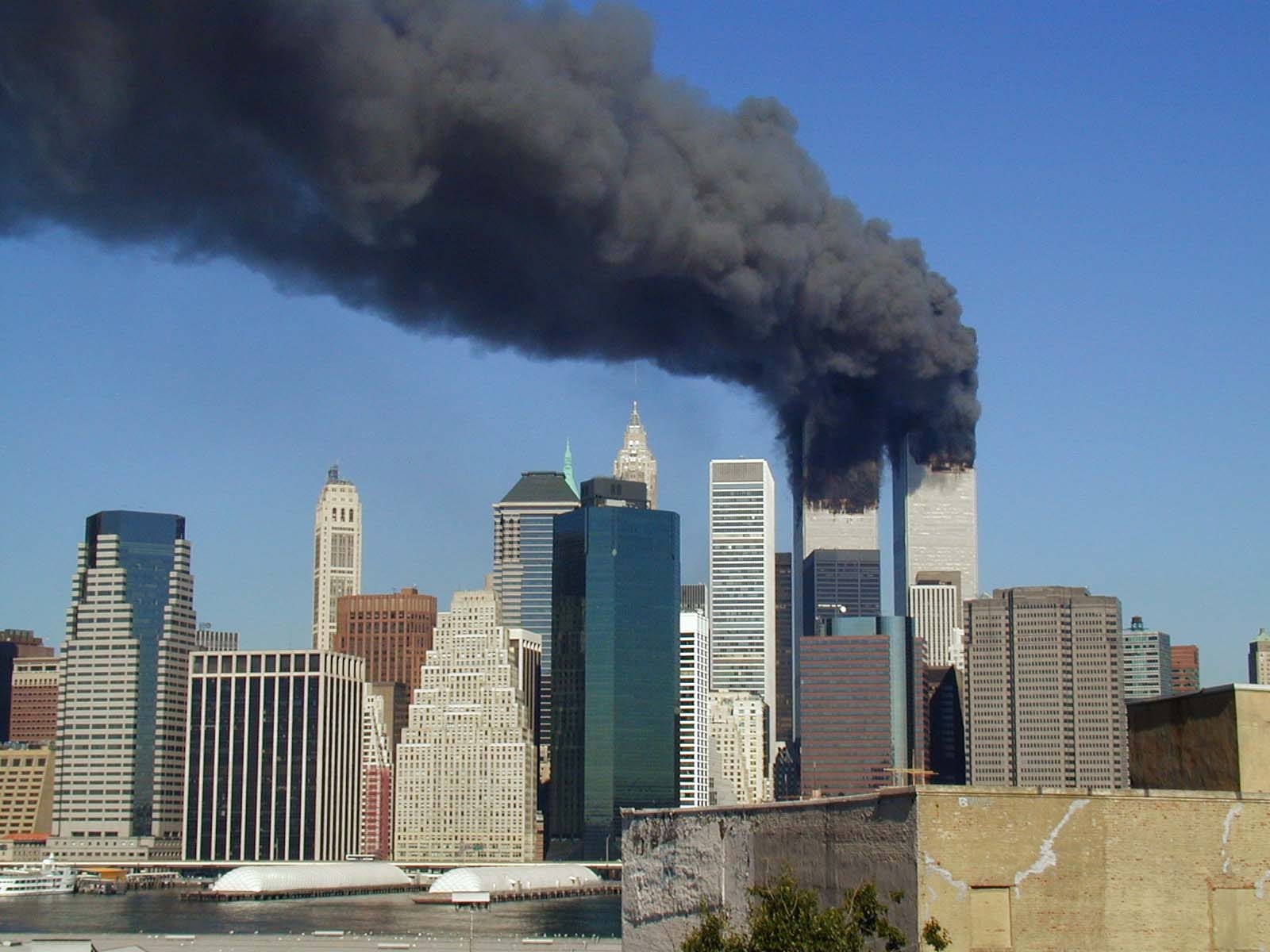
That logic seems to be a distant memory. I remember Vivek Ramaswamy, who ran for President as a Republican, amplifying 9/11 conspiracy theories and calling for a Saudi investigation into events we witnessed and investigated in real time. And recently, Cenk Uygur, who ran as a Democrat in the same cycle, posted that he no longer believes the official 9/11 account.
This is not a left or right failure.
It’s a bipartisan collapse of institutional trust, fed by an attention economy where the loudest voice wins. Abandoning the institution built from the lessons of the most deadly terrorist attack on American soil should give us pause and rightfully worry us, especially as Congress takes a recess rather than stay to negotiate funding the agency, with proper oversight.
A Leadership Problem
The Department of Homeland Security is currently run by Kristi Noem. I’m not her biggest fan — but you don’t need to take my word for it.
Tomi Lahren, a right-leaning influencer who once interned in Noem’s office in South Dakota, has been clear-eyed about her: She’s corrupt, she told me.
Noem has also told us who she is. In a book published during the presidential campaign, she admitted to shooting a 14-month-old wirehaired pointer she said was untrainable. In my experience, it’s the trainer, not the dog. She shot her own dog because of her own failures.
Yet Donald Trump gave her the keys to one of the most powerful agencies in the federal government.
According to a Wall Street Journal investigation published last week, Noem and her senior adviser Corey Lewandowski, both married, are having an alleged relationship described by a FEMA official as “the worst-kept secret in D.C.”
The Journal reported they berate senior staff, administer polygraph tests to employees they distrust, and have created significant dysfunction across the department. Lewandowski, technically capped at 130 days of government service per year as a special government employee, reportedly functions as Noem’s de facto chief of staff, a formal title Trump reportedly denied him because of the relationship rumors.
The Journal also reported that Lewandowski fired a U.S. Coast Guard pilot because Noem’s blanket wasn’t transferred when she had to switch planes due to a maintenance issue. The pilot was only reinstated because no one else was available to fly them home.
This all comes after multiple outlets reported that Noem’s purse was stolen at a Washington DC restaurant last April, with $3,000 in cash inside. Honestly you’re the Homeland Security Secretary and you lose $3,000 cash? I have some questions.
These are not isolated incidents. They are a portrait of judgment. Trump, asked about the Noem-Lewandowski relationship aboard Air Force One, said he hadn’t heard about it. Reports suggest otherwise.
Any discussion of shutting down DHS should start here, with the incompetence and corruption in front of us.
The Cost of the Shutdown
The DHS shutdown was triggered by Democrats demanding accountability after federal agents fatally shot two American citizens, Alex Pretti and Renee Nicole Good, during protests in Minneapolis in January.
Their demands are not radical: body cameras, identification requirements, judicial warrants for arrests on private property. Basic accountability measures applied to every other law enforcement officer in this country.
That President Trump cannot see that — and that the Keystone Cop-level leaders he has in place in this department can’t see that — is infuriating and debilitating to our nation’s security.
Meanwhile, more people died in ICE custody in 2025 than in the previous four years combined. According to reporting by The Guardian and NPR, at least 32 people died in ICE detention last year, the deadliest year since 2004. The Office of Detention Oversight, the internal watchdog responsible for investigating those deaths, does not operate when shutdown.
Congress is not even in session this week.
Speaker of the House Mike Johnson, who defers almost entirely to Trump, evidently is not in a position to negotiate independently. And Trump, who built his brand on saying “you’re fired,” has proven oddly reluctant to remove people who are embarrassing him and failing the public.
What We’re Leaving Unguarded
Among the agencies most affected by the shutdown is the Cybersecurity and Infrastructure Security Agency (CISA) the part of DHS specifically charged with protecting American critical infrastructure from cyberattacks, at a moment when threats from Russia, China, and others are well-documented and escalating. Leaving CISA understaffed is not an abstraction. It is a vulnerability, created by choice.
Abroad, President Trump is positioning himself as a broker of peace in the Middle East, a region that was vulnerable in part because Israel’s leaders were too busy fighting each other to pay enough attention to what was building at their border. The parallel is not subtle.
I have to wonder: What are we leaving unguarded while we fight amongst ourselves?